
A More Precise Way to Straighten Teeth
Skeletal anchorage has transformed what is possible in orthodontics. By improving control and predictability, it allows us to achieve excellent results more efficiently and, in many cases, avoid more invasive procedures.
If you would like to find out whether this approach is suitable for you, we would be happy to discuss it during your consultation.
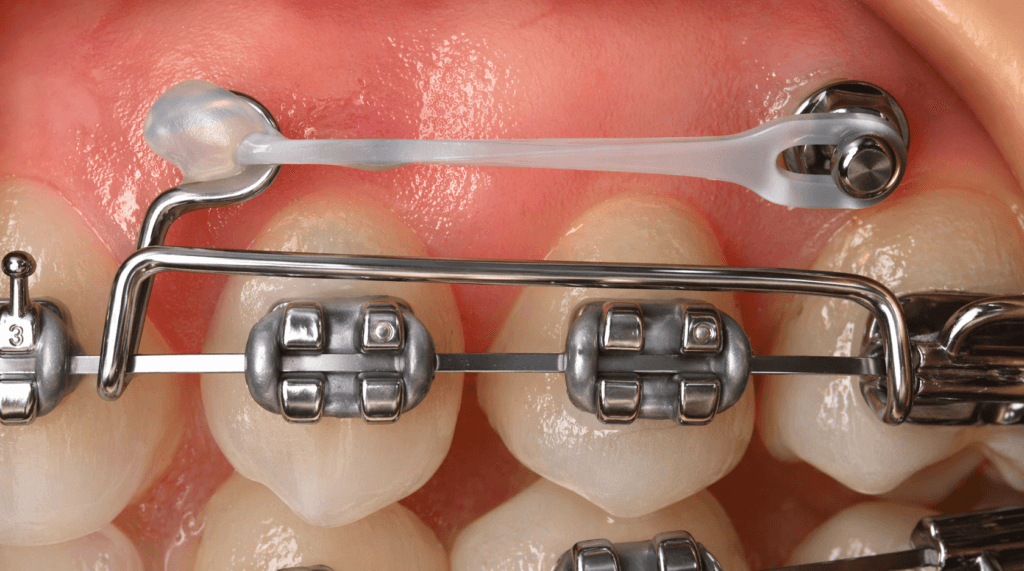
What are TADs (Temporary Anchorage Devices)?
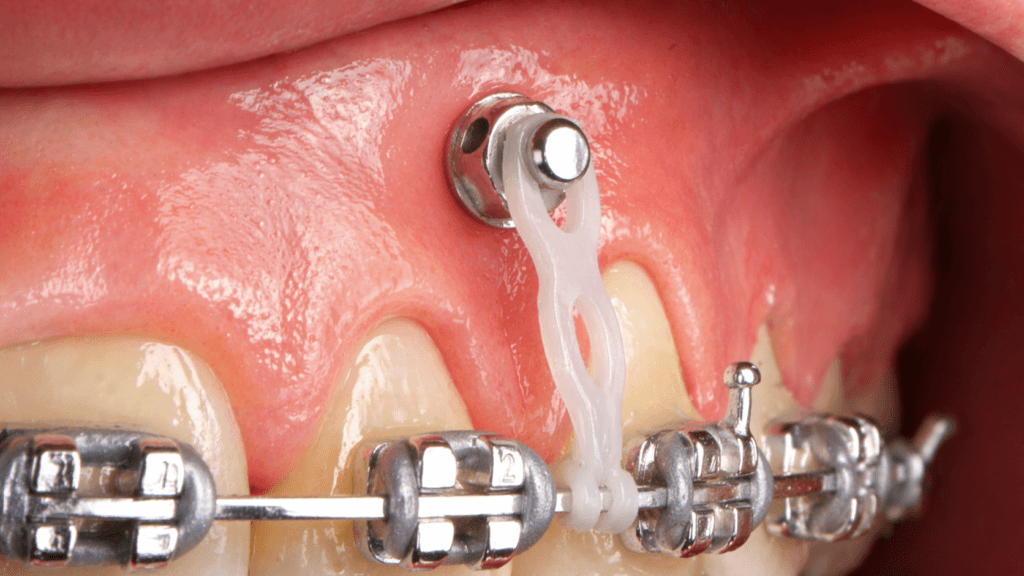
TADs are very small titanium screws (often called “mini-screws”) that are gently placed into the jawbone under local anaesthetic.
They:
- Are quick and comfortable to place
- Do not require surgery in most cases
- Can be removed easily once no longer needed
- Provide a stable “anchor point” to move teeth precisely
Think of them as a fixed handle that allows us to move specific teeth without affecting others.
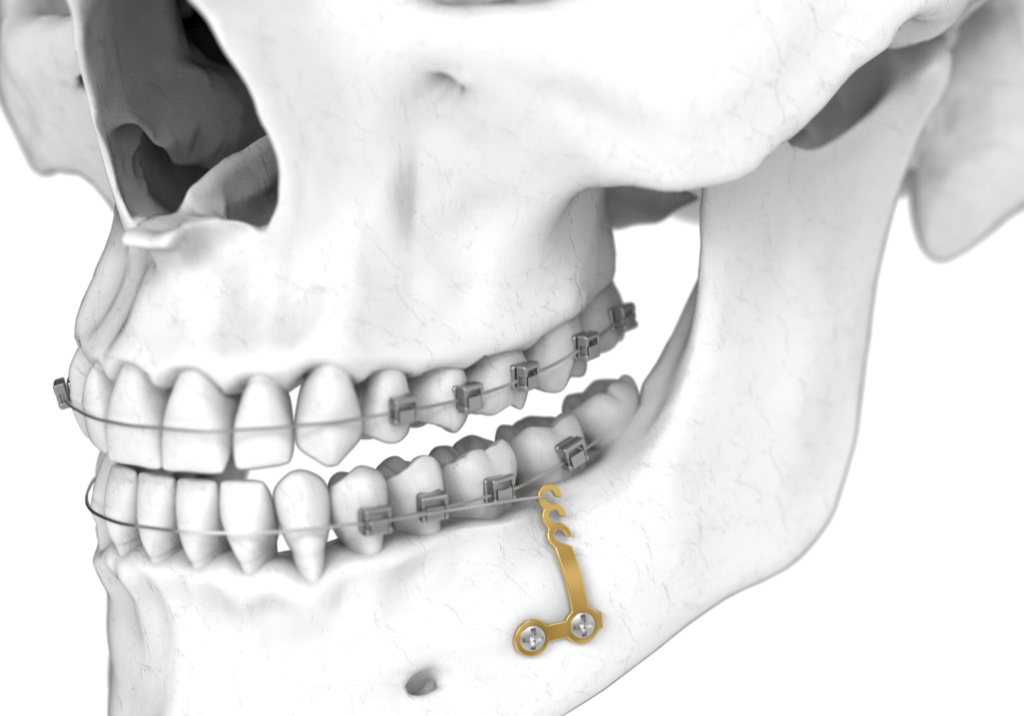
What are Miniplates?
Miniplates are slightly larger anchorage devices that are secured to the bone with small screws, usually placed by a specialist oral surgeon.
They are typically used in more complex cases and allow:
- Stronger forces when needed
- Movement of multiple teeth at once
- Advanced corrections that would otherwise be very difficult without surgery
Why might I need skeletal anchorage?
Skeletal anchorage can be particularly useful for:
- Correcting prominent front teeth
- Closing gaps efficiently
- Treating open bites or deep bites
- Improving facial balance in certain cases
- Avoiding the need for more invasive surgery or extractions in some situations
Dr Laurence Masters’ Expertise
Dr Laurence Masters has extensive experience in skeletal anchorage techniques, including both TADs and miniplates. He is a recognised national and international lecturer on the subject, regularly teaching other dentists and orthodontists how to use these advanced methods safely and effectively.
His expertise ensures that:You receive the most up-to-date treatment approaches, your care is carefully planned with precision, complex cases can be managed with confidence.


